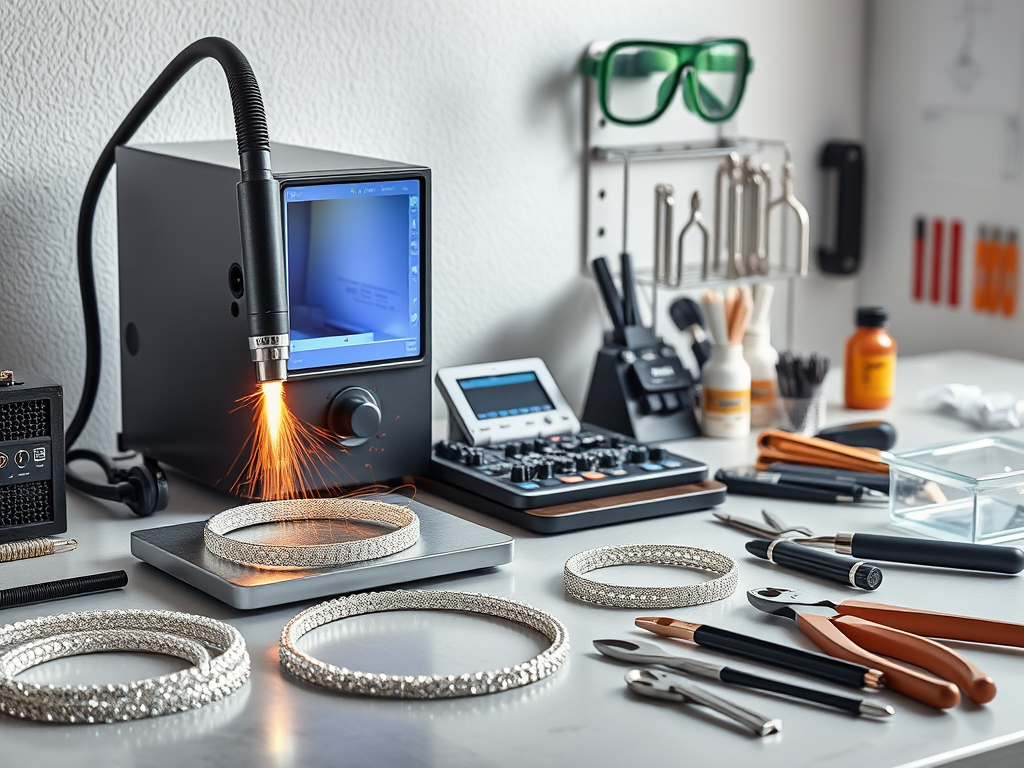
Did you know that learning how to start a permanent jewelry business could earn you up to $350 per hour?
That’s right – this trending jewelry technique that creates “forever bracelets” without clasps or locks can be incredibly profitable with the right approach. Permanent jewelry consists of chains soldered from end to end using a welding machine, giving wearers a seamless, continuous look that never comes off .
However, many people dive into a new business venture without proper training and end up struggling to succeed . Fortunately, your permanent jewelry start up cost doesn’t have to break the bank. You can get started with affordable options like the PermaLinx Starter Collection for only $175 , which includes the most popular styles to help launch your business .
This guide will walk you through everything you need to start your own permanent jewelry business – from essential equipment like pulse arc welders and safety goggles to training, pricing, and marketing strategies that will help you stand out in this growing market.
Ready to transform your jewelry skills into a super profitable business? Let’s get started!
Starting a permanent jewelry business requires less upfront investment than many other ventures. The typical cost ranges between $3,000 and $6,000 to launch your own permanent jewelry business [1]. Understanding these costs upfront will save you time and frustration as you begin your entrepreneurial journey.
Understanding your permanent jewelry start up cost
The most significant expense when starting your permanent jewelry business is the welder. Professional pulse-arc welders typically range from $1,700 to $3,000 [1], depending on the model and features. Two popular options in the industry include:
- Zapp Plus® 2: A compact, user-friendly welder perfect for beginners and professionals alike, featuring adjustable power settings [1]
- Orion mPulse® 2.0: A premium option with touchscreen controls and precise energy delivery, priced at the higher end of the spectrum [1]
Beyond the welder, your startup costs include inventory (chains, charms, and connectors), safety equipment, and business essentials. Some permanent jewelry artists invest in vendor booth necessities if they plan to sell at events, adding $500-$1,500 to initial costs [1].
What’s included in a starter kit
Purchasing a comprehensive starter kit offers convenience and ensures you have all necessary components. Most professional kits include:
A quality starter kit typically contains an arc welder, safety gear, tools, and inventory to begin serving clients immediately. The Permanent Jewelry Kit from Sunstone Welders, priced at $200, provides essential tools with unmatched quality [2]. Higher-end options like the Orion mPulse® Platinum Permanent Jewelry Starter Kit offer more comprehensive packages at $5,199 [3].
Regardless of price point, look for kits containing:
- Pulse-arc welder
- Safety equipment (welding glasses, leather pad)
- Precision pliers (grounded and ungrounded)
- Chain cutter and practice chain
- Jump rings in gold and silver
- Basic starter inventory
How to start doing permanent jewelry on a budget
For those with limited funds, several strategies can help you launch successfully without breaking the bank:
First, consider entry-level welders designed for beginners. The Zapp or Zapp Plus welders offer basic controls and user-friendly interfaces at more accessible price points [2]. These budget-friendly options still provide professional results while keeping your initial investment manageable.
Additionally, start with a smaller inventory of less expensive chains. Choose sterling silver and gold-filled chains instead of solid gold options, as these can be found for as little as $4 per foot [2]. This approach allows you to gradually build your inventory as you develop your clientele and determine which styles sell best.
Furthermore, simplify your setup by focusing only on essential tools initially. While fancy displays and extensive charm collections are nice, they aren’t necessary for your first clients. Instead, invest in quality over quantity.
Ultimately, many permanent jewelry artists report breaking even after selling approximately 44-77 bracelets [3]. With bracelets selling for around $75 each and costing about $4 to make, your profit margins can reach approximately 95% [3], allowing you to quickly recover your initial investment.
Remember that social media marketing costs virtually nothing yet provides tremendous value for permanent jewelry businesses. Building an Instagram presence connects you directly with potential customers without additional expenses [2], making it an essential component of your budget-friendly launch strategy.
Learn the Craft and Build Confidence
Mastering the craft of permanent jewelry welding is essential before you start charging clients. Once your equipment is secured, your focus should shift to developing the skills and confidence needed to create flawless, lasting connections.
Training options: online vs in-person
When it comes to learning permanent jewelry techniques, you have several training paths to consider:
Self-guided learning: Some experienced artists suggest that formal training isn’t strictly necessary. “There’s so much information online and you don’t need to pay for training,” notes one jewelry artist [4]. This approach works especially well for self-motivated learners who prefer learning at their own pace through free online resources.
Online courses: Structured online training programs offer comprehensive education without geographical limitations. These courses typically include video tutorials covering everything from welding techniques to business setup. Programs like LINKED Permanent Jewelry Training provide “7 show-stopping modules, 36 step-by-step lessons, and hands-on videos” [5] that guide you through the entire process. Online options range from basic tutorials to complete business packages priced between $200-$5,000[6].
In-person workshops: For hands-on learners, in-person training provides immediate feedback and practical experience. Companies like The Golden Bond offer “1:1 in personal coaching sessions” [7] where you can learn directly from industry experts. These sessions allow you to practice under supervision and ask questions in real-time.
Regardless of which path you choose, look for training that covers both technical skills and business aspects. Quality programs should teach you “how to use the welding equipment, find out which types of jewelry are most popular, order supplies from reputable suppliers, establish your prices, market your services, and grow a solid customer base” [6].
Practicing with sample chains
Before working with paying clients, dedicate time to practice and build confidence:
- Start with practice pieces – most suppliers provide sample chains specifically for this purpose [8]
- Ask friends and family to be your test subjects, charging only enough to replace materials [6]
- Focus on consistent welding technique across different chain types
Consistent practice is crucial for developing muscle memory and speed. Most artists report needing about “” three weeks of consistent – almost daily – practice[6] before feeling fully comfortable with the process. This practice period allows you to refine your technique while building confidence in handling different scenarios.
Avoiding common beginner mistakes
New permanent jewelry artists typically encounter several pitfalls that can be easily avoided:
Using low-quality materials: “You do not want to weld plated jewelry onto somebody just to have it tarnish, and then with that tarnishing, your business name tarnishes as well” [4]. Invest in quality chains that won’t disappoint customers.
Skipping business legalities: “You need to file your business with your state. Period. End of story. Non-negotiable” [4]. The same applies to insurance and collecting sales tax – neglecting these requirements can lead to significant financial penalties later.
Rushing through the learning process: Attempting to serve clients before mastering basic skills can damage your reputation. Take time to practice until you can “effortlessly manage the process from beginning to end” [6].
Underpricing your services: Many beginners charge too little, not accounting for their time, materials, and expertise. Proper training helps you understand appropriate pricing structures that ensure profitability.
Remember that building confidence takes time but pays tremendous dividends. As one expert notes, “As you gain confidence in your craft, your creations will naturally become more appealing to your customers” [8]. This confidence translates directly into smoother client interactions and higher-quality work that will distinguish your business in this growing market.
Gather the Tools You’ll Need
The right tools form the foundation of your permanent jewelry business success. Quality equipment not only ensures client safety but also determines the durability and appearance of your finished pieces.
Welder and safety gear essentials
Selecting the right welder is perhaps the most critical decision you’ll make when gathering equipment. The pulse arc welder creates the seamless bond that defines permanent jewelry. Popular options include:
- Sunstone Orion mPulse welders (ranging from $1,900-$4,000)
- Sparkie welders (more affordable at approximately $1,000)
- PulsePoint nano welders (compact and portable)
Safety gear must never be an afterthought. Consequently, you need welding glasses with proper UV protection to shield your eyes from the bright flash. Additionally, a welding pad provides both a safe surface for your work and protection for your clients. Leather finger cots shield your fingertips during the welding process.
Pliers, cutters, and accessories
Beyond the welder, you’ll need precision tools to handle delicate chains:
Fine-tipped jewelry pliers allow for precise manipulation of chains and jump rings. Moreover, sharp flush cutters ensure clean cuts without jagged edges that might catch on clothing. Indeed, organizing your workspace with a tool caddy or sectioned tray helps maintain efficiency during client appointments.
Chain measuring tools—either a dedicated ruler or marked mat—provide consistency in your offerings. Above all, having tweezers on hand helps with precise placement of tiny components like charms or connectors.
Optional tools for better results
As your business grows, certain additional tools can elevate your efficiency and offerings. A heat-resistant silicone mat creates a professional workspace that protects surfaces. Likewise, magnifying glasses or a jeweler’s loupe helps with inspecting your welds for quality control.
Chain straighteners prevent kinks and tangles in your inventory. In particular, presentation boxes or pouches enhance the client experience while protecting their new jewelry during transport.
For mobile setups, a portable lightbox improves visibility when working in various lighting conditions. Certainly, a professional jewelry cleaning solution helps your creations shine their brightest before clients wear them.
With these tools in place, you’re technically prepared to deliver professional permanent jewelry services that will impress clients and build your reputation for quality craftsmanship.
Set Up Your Business and Go Mobile
Beyond creating beautiful jewelry pieces, establishing a legitimate business structure protects your assets and builds client trust. Let’s explore the essential legal steps for turning your jewelry skills into a profitable venture.
How to start your own permanent jewelry business legally
Registering your business as a legal entity is non-negotiable when starting a permanent jewelry business. Most entrepreneurs choose either a Limited Liability Company (LLC) or sole proprietorship structure. An from business liabilities, providing crucial protection LLC separates your personal assets[1].
After selecting your structure, obtain an Employer Identification Number (EIN) from the federal government—essentially a Social Security number for your business [1]. This identification is necessary for opening business bank accounts and handling tax obligations.
According to experts, “You need to file your business with your state. Period. End of story. Non-negotiable.” , yet all others require a sales tax license Five states (Alaska, Delaware, Montana, New Hampshire, and Oregon) don’t have statewide sales tax[6].
Choosing a business name and getting a license
Your business name serves as the first impression for potential clients. Therefore, select something memorable that reflects your brand’s personality and the lasting nature of permanent jewelry. Consider names that evoke elegance, commitment, or emotion—whatever matches your unique style [9].
First, verify your chosen name’s availability by checking:
- State business registries
- Domain availability for matching website URLs
- Social media handles across platforms
- Trademark databases [9]
Afterward, register your business name at the state level to prevent others from using it locally. For broader protection, consider trademark registration with the US Patent and Trademark Office [1].
Mobile setup tips for events and home services
Throughout the industry, mobility has become essential for permanent jewelry businesses. Many successful entrepreneurs operate primarily through pop-ups rather than traditional storefronts [6].
For effective mobile operations, prepare:
- A compact, professional setup requiring minimal space (8×10 feet is standard) [10]
- Sturdy tables and proper lighting for precision welding [10]
- Payment processing capability through services like Square [6]
Mobile concierge services can differentiate your business, bringing the entire studio experience to clients’ homes or event venues. As such, consider offering private parties with minimum guest requirements—many businesses set 10-person minimums for private events [11].
Finally, establish clear travel policies. Many businesses offer complimentary service within 15-25 miles and charge per additional mile for longer distances [10]. Creating transparent booking procedures with non-refundable deposits (typically $100) helps secure dates and manage client expectations [11].
Promote and Scale Your Services
Successful permanent jewelry artists know that creating beautiful pieces is only half the equation—promoting your services effectively turns skills into profit. With strategic marketing, you can build a thriving business that consistently attracts new clients while encouraging repeat purchases.
Using social media to attract clients
Instagram stands out as the top marketing platform for permanent jewelry businesses [12]. This visual platform allows you to showcase your craftsmanship through high-quality images and videos. Plus, it helps you connect with fellow artists and potential clients in your area.
To maximize your social media impact:
- Share behind-the-scenes content of your welding process
- Post customer testimonials and success stories
- Use educational content to position yourself as an industry expert
- Engage with your audience through comments and messages
Notably, you don’t need to post daily, but you do need a consistent marketing plan [13]. Your feed builds credibility, while stories and reels create connection with potential clients. Videos particularly drive engagement—even simple behind-the-scenes clips can bring your work to life.
Creating a simple website or booking page
For permanent jewelry artists, a booking page is essential[13]. Your website serves as a digital storefront, portfolio, and communication hub simultaneously [14]. Potential customers often ask, “Do you have a website where I can see more of your work?” [15].
A professional website instantly elevates your brand’s credibility and helps you rank higher in local searches for “permanent jewelry near me” [16]. This local SEO optimization is crucial since most customers prefer in-person experiences for permanent jewelry services.
Building repeat business with loyalty programs
Loyalty and referral programs can be game-changers for your permanent jewelry business [6]. Permanent jewelry isn’t meant to be a one-time purchase—customers can create unique stacks of bracelets, necklaces, and anklets over time.
Develop simple loyalty systems where clients earn points with every purchase that can be redeemed for rewards [17]. As an example, after earning specific point thresholds, you might offer free charms, connectors, or percentage discounts on future transactions [18].
Word-of-mouth referrals provide a level of trust that other marketing strategies cannot match [6]. Encourage satisfied customers to refer friends by offering incentives like free touch-ups or exclusive discounts [19].
Conclusion
Starting a permanent jewelry business represents an exciting opportunity with remarkable profit potential. The seamless, forever bracelet trend continues to gain momentum, attracting clients willing to pay premium prices for these unique keepsakes.
Most importantly, you now possess all the essential knowledge needed to launch your permanent jewelry venture successfully. From selecting quality welders and tools to practicing your craft until perfection, each step builds toward a thriving business. The relatively low —make this business accessible compared to many other entrepreneurial paths.startup costs—typically between $3,000 and $6,000
Remember that legitimate business formation protects your personal assets while building client trust. Therefore, registering your business, securing proper licenses, and understanding tax obligations must become priorities before your first client appointment.
Your mobile setup offers tremendous flexibility, allowing you to meet clients where they gather rather than requiring expensive retail space. This approach significantly reduces overhead costs while maximizing your earning potential through events, parties, and home services.
Social media marketing, particularly through Instagram, will become your most powerful client attraction tool. Consequently, consistent posting of high-quality images and videos showcasing your work builds credibility and attracts your ideal customers without substantial advertising expenses.
The permanent jewelry industry presents an ideal combination of creative fulfillment and financial reward. With per piece, your investment can quickly transform into substantial income. Additionally, loyalty programs encourage repeat business, turning first-time customers into lifelong clients who build their jewelry collections over time.profit margins approaching 95%
Take these insights, gather your tools, perfect your technique, and step confidently into the permanent jewelry business. Your journey toward entrepreneurial success begins with that first perfect weld—a seamless connection that mirrors the endless possibilities awaiting your new venture.
FAQs
Q1. How profitable is a permanent jewelry business? A permanent jewelry business can be highly profitable due to low material costs and high markup potential. With proper management, you can achieve profit margins of up to 95% per piece, allowing for quick recovery of initial investments and substantial income growth.
Q2. What are the legal requirements for starting a permanent jewelry business? While you don’t need a specific license to perform permanent jewelry services, most states require a sales tax license. It’s essential to register your business, obtain an Employer Identification Number (EIN), and comply with local tax regulations to operate legally.
Q3. What is the typical startup cost for a permanent jewelry business? The initial investment for a permanent jewelry business typically ranges from $3,000 to $6,000. This covers essential equipment like a pulse-arc welder, starter inventory, safety gear, and basic business setup costs.
Q4. What equipment is necessary to start offering permanent jewelry services? Essential equipment includes a pulse-arc welder, safety gear (welding glasses, leather pad), precision pliers, chain cutters, practice chains, and a starter inventory of chains and charms. Additional items like a portable lightbox and jewelry cleaning solution can enhance your service quality.
Q5. How can I effectively market my permanent jewelry business? Instagram is considered the top marketing platform for permanent jewelry businesses. Showcase your work through high-quality images and videos, share behind-the-scenes content, and engage with your audience. Additionally, creating a professional website with a booking page and implementing loyalty programs can help attract and retain clients.
References
[4] – https://www.youtube.com/watch?v=nRvZkqvaLag
[5] – https://www.permanentjewelrytraining.com/shop/p/training-course-only
[6] – https://permanentjewelrycenter.com/how-to-start-a-permanent-jewelry-business/
[8] – https://www.jbloomdesigns.com/launch-your-permanent-jewelry-start-up-cost-tips
[9] – https://permanentjewelrycenter.com/permanent-jewelry-business-name-ideas/
[13] – https://permanentjewelrycenter.com/how-to-market-jewelry/
[15] – https://shop.permanentjewelrycenter.com/products/permanent-jewelry-business-web-design
[16] – https://noblepack.com/blogs/the-daily-noble-blog/how-to-start-a-permanent-jewelry-business
[17] – https://www.attachednc.com/loyalty–earn-links–copy
[18] – https://chelanlinks.com/loyalty[19] –https://www.buzzsprout.com/2364344/episodes/16275431-how-to-attract-40-permanent-jewelry-clients-per-month